Retrieval-Augmented Generation (RAG): Giving LLMs Corporate Memory
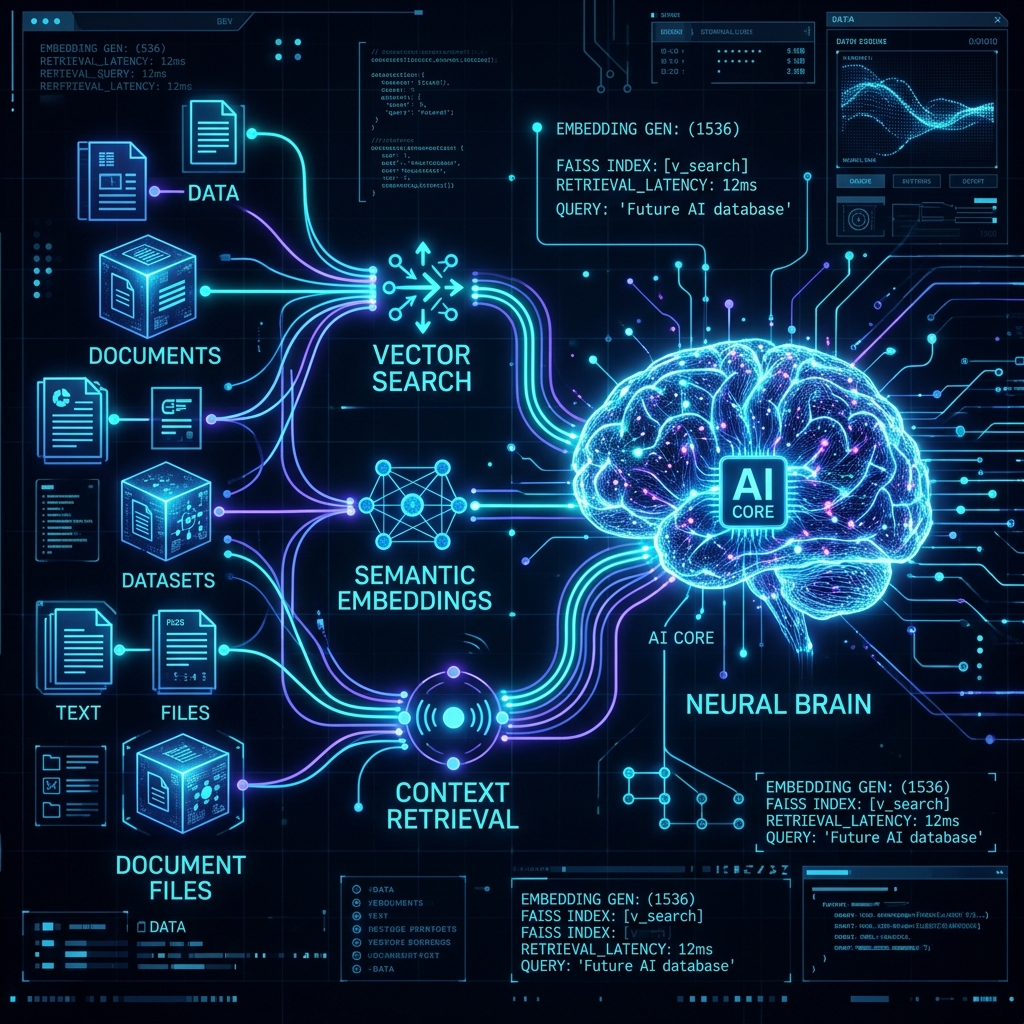
Large language models possess general knowledge about the world, but they lack awareness of private, proprietary corporate data. Trying to train or fine-tune models on company documents is expensive and highly complex. This is where Retrieval-Augmented Generation (RAG) excels, providing a dynamic bridge between standard models and private knowledge bases.
The RAG Architecture
RAG works by converting corporate files (PDFs, wiki pages, database logs) into numerical vectors using embedding models. When a user queries the system, the vector database finds the most relevant passages and injects them directly into the LLM prompt as context.
# A simple representation of RAG prompt context injection
def query_rag_system(user_query, vector_db, llm):
    # Find relevant document fragments
    relevant_chunks = vector_db.similarity_search(user_query, k=3)

    # Inject fragments into LLM prompt
    augmented_prompt = f"""
    Use the following corporate context to answer the user query:
    {relevant_chunks}

    Question: {user_query}
    """
    return llm.generate(augmented_prompt)
Business Impact
By using RAG, organizations get highly accurate responses tailored specifically to company procedures, without risk of hallucination. It turns static company documentation into a searchable, interactive, and intelligent internal brain.