How to Calculate and Control LLM Costs in Production
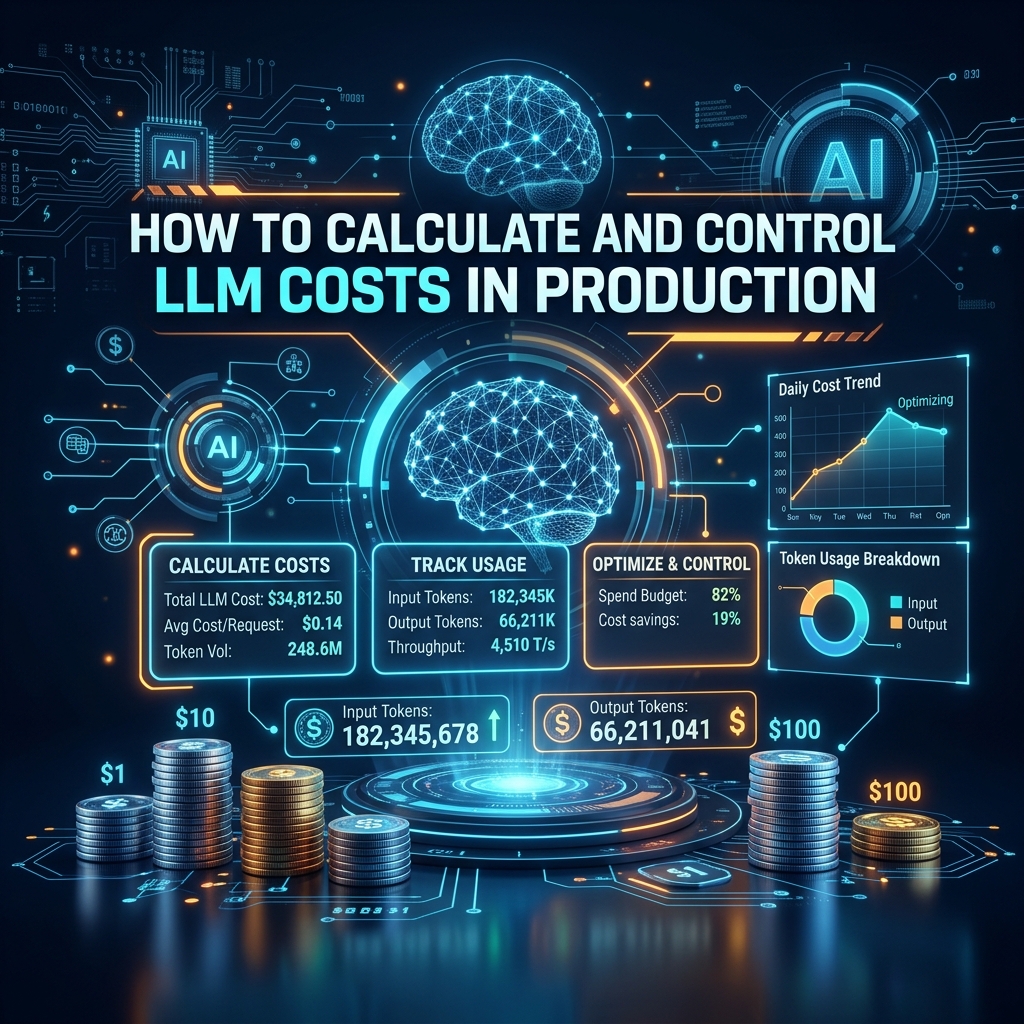
The Hidden Expense of LLM Scale
Deploying LLMs to production without cost controls is a recipe for budget disaster. Unlike traditional computing where resources are relatively fixed, LLM costs scale linearly with user traffic and input size. Managing these costs requires systematic token tracking, prompt design improvements, and aggressive caching.
1. Track Everything in Real-Time
You cannot control what you do not measure. Your application must record the exact number of input and output tokens for every API request, mapping them to specific users, features, and model tiers. This allows you to identify which queries or users are driving up expenses and set up usage quotas.
2. Implement Semantic Prompt Caching
A huge portion of LLM costs comes from repeating the same system prompts and database context schemas over and over. By utilizing providers that support prompt caching (like Anthropic and OpenAI), you can reduce input token costs by up to 90%. Additionally, setting up a local cache (e.g. Redis) to store common user queries and their exact responses bypassing the LLM entirely is highly effective.
3. Model Cascading
Don't use a sledgehammer to crack a nut. Build a router that classifies the complexity of an incoming request. Simple routing decisions, formatting, or greeting responses can be handled by small, ultra-cheap models (e.g., Llama-3-8B or GPT-4o-mini). Reserve larger, expensive models solely for deep logical reasoning or complex coding tasks.