Designing Enterprise Integrations for SAP and NetSuite
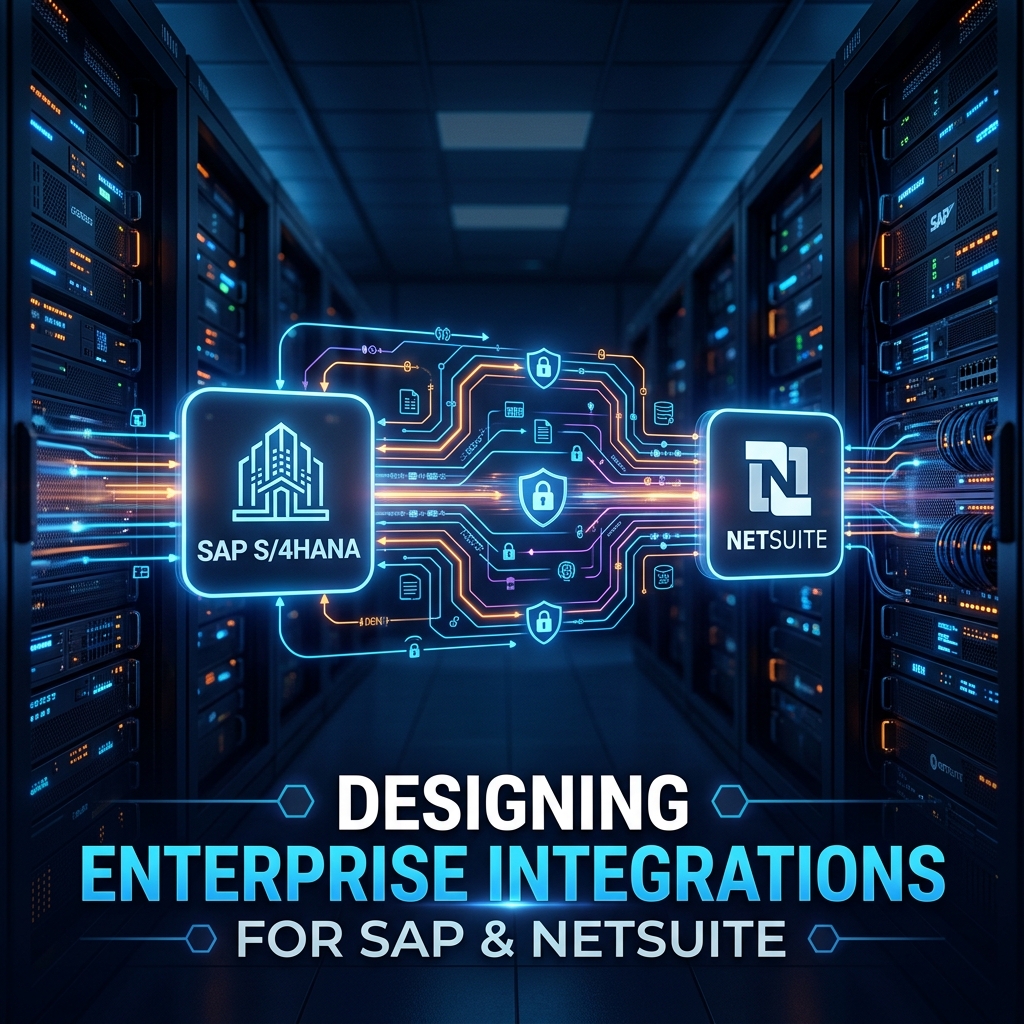
Navigating ERP Complexity at Scale
Integrating modern web applications or AI systems with Enterprise Resource Planning (ERP) systems like SAP and Oracle NetSuite is one of the most challenging tasks in enterprise software. ERPs are complex, highly customized, and critical to daily business operations. A failed integration can disrupt shipping, accounting, or sales pipelines.
Understanding ERP Communication Interfaces
SAP relies on RFCs (Remote Function Calls), IDocs (Intermediate Documents), and modern OData REST/SOAP APIs managed via SAP API Business Hub. NetSuite uses SuiteTalk (SOAP and REST web services) and SuiteScript (custom server-side Javascript). The key is designing a clean translation layer between your application's domain models and the verbose, deeply nested structures expected by these legacy platforms.
Key Integration Patterns
- Asynchronous Processing: Never make synchronous ERP calls inside user HTTP requests. Use a message broker (like RabbitMQ or AWS SQS) to queue transactions. This isolates your application from ERP downtime or high response latencies.
- Idempotency and Deduping: Ensure every transaction has a unique transactional key. ERPs must not process duplicate requests (e.g., charging a customer twice or creating two invoices) if a network timeout occurs during transmission.
- Rate Limiting and Throttling: ERP API endpoints often have tight rate limits. Implement queues that throttle outgoing requests to match the ERP's capabilities.
By designing a resilient, queue-backed, and decoupled middleware layer, you can bridge the gap between modern agile systems and enterprise core databases.